Since 28th of February 2026, the United States and Israel have been fighting Iran, and it is being shown to us on our digital screens just as much as it is on the ground. I chose this topic for this visual storytelling discussion because I’ve seen many fakes about it, and it’s also heavily documented. Visual literacy is defined as the “ability to construct meaning from visual images” (Bamford,2003). The images resulting from this conflict illustrate that ability, especially given how widespread fake images are on the internet. Therefore, instead of delving into the war and the details itself, I want to focus on five photographs from the past six months and examine how each is framed, what it leaves out, and how it shapes the narrative.
Scene Setter: The Strait of Hormuz
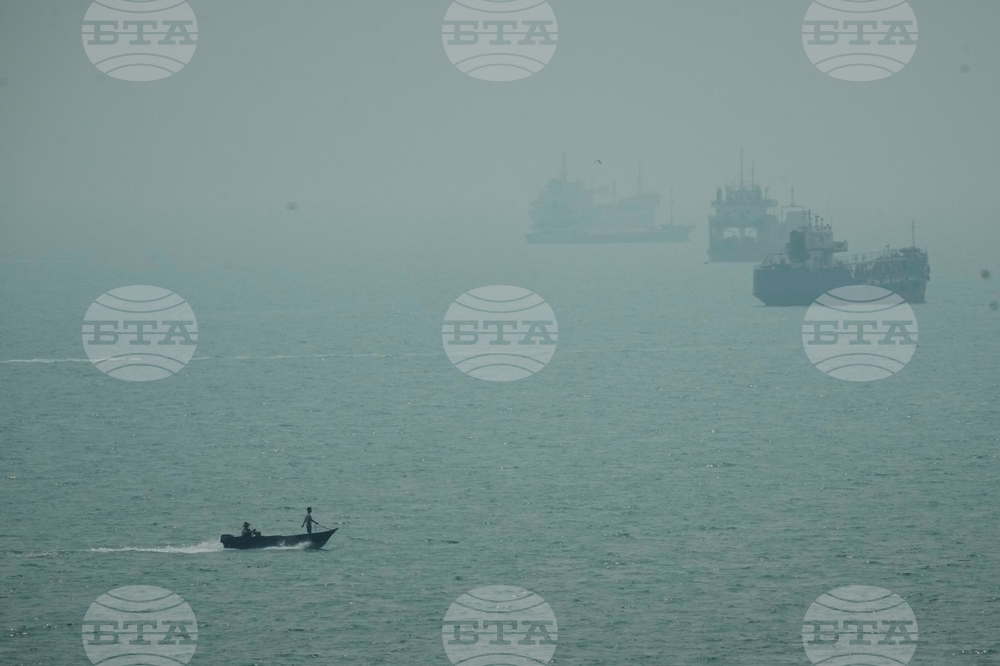
I chose to start here because this photo shows a lot without a weapon on site. For context, the Strait of Hormuz crisis is one of the war’s continuing aftermath issues, and the wide shot turns that situation into a series of ships moving in place. Bamford (2003) considers scale, framing, depth, and cropping to be part of an image’s visual “syntax”; in this case, distance is a deliberate choice. It makes the conflict feel like a standoff rather than a battle. What’s missing is the cost to workers, fuel prices, and the people waiting on the ships.
Medium Shot: Three Girls at a Cafe
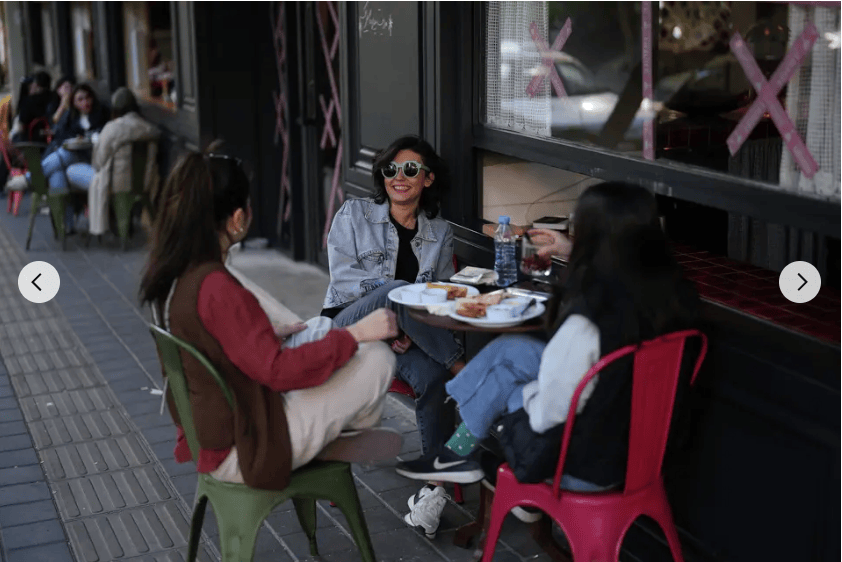
I wanted to show that, although war is ongoing in Iran, ordinary life can still look like this. This gives us a closer look from the inside. This is one of many photos showing people in Tehran keeping up routines like meeting friends for brunch. Other photos in this gallery show people shopping at markets. The gallery’s title, “Photos from Tehran, where daily life continues despite war,” frames the images before we even take a good look at them. Coombs (2016) describes a frame as an organizing idea that gives a set of images meaning. This headline does exactly that by instructing us to see every photograph as an example of resilience. Bamford (2003) asks, “Whose voice is not heard?” and the photo can’t tell us what the girls, or the people clearing rubble across town, are feeling. Although it appears calm, we have no way of knowing whether that calm is genuine or merely what the photo captured.
Portrait: A Boy at a Damaged Building
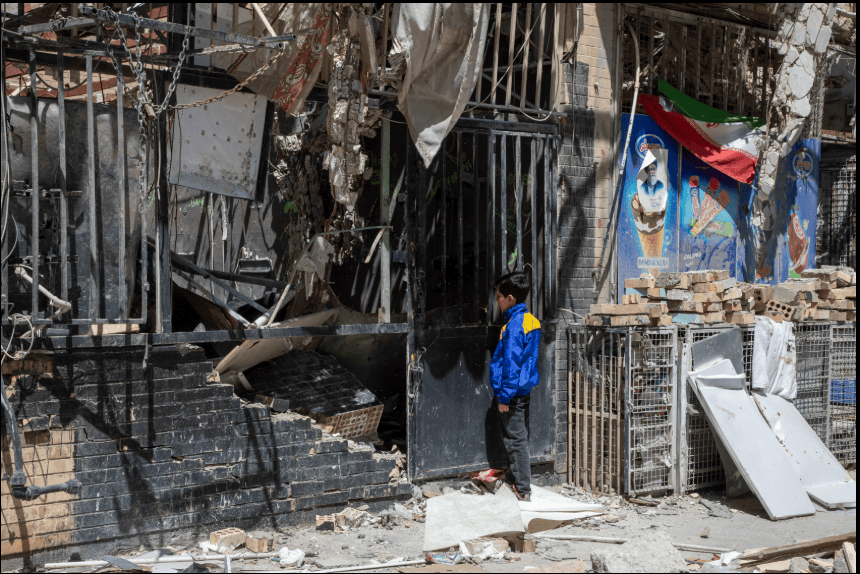
The image of a child looking into a wrecked home makes the damage feel personal, whereas the wide shots do not. Coombs (2016) argues that images have a greater ability to influence people’s intentions than the words around them. For this reason, pictures like this are so powerful, though they also carry a degree of discomfort. It invites sympathy; looking at this image, I can’t help but feel bad for the environment this child lives in. But it also gives me no facts about who lives in these buildings or where they are now.
Detail shot: Terns on a Sunken Boat
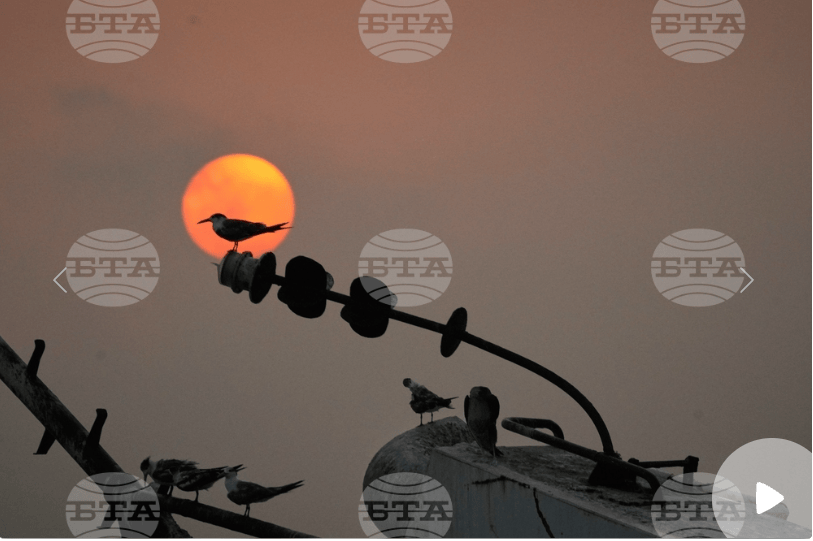
This is the quietest photo in the set, and I believe it works so well because of the contrast. Coombs (2016) describes contrast as defining something by what it isn’t. As we can see, the image shows a peaceful sunset with birds flocking around; however, beneath that, wreckage and chaos lie below. Birds roosting on a wreck also suggest the conflict has lasted long enough for its aftermath to become scenery. Bamford (2003) says meaning in an image depends on culture and context, and that applies here. Without knowing a boat sank, you might just see a pretty sunset and think nothing of it.
Action Shot: B-1 Bomber Ready for Takeoff
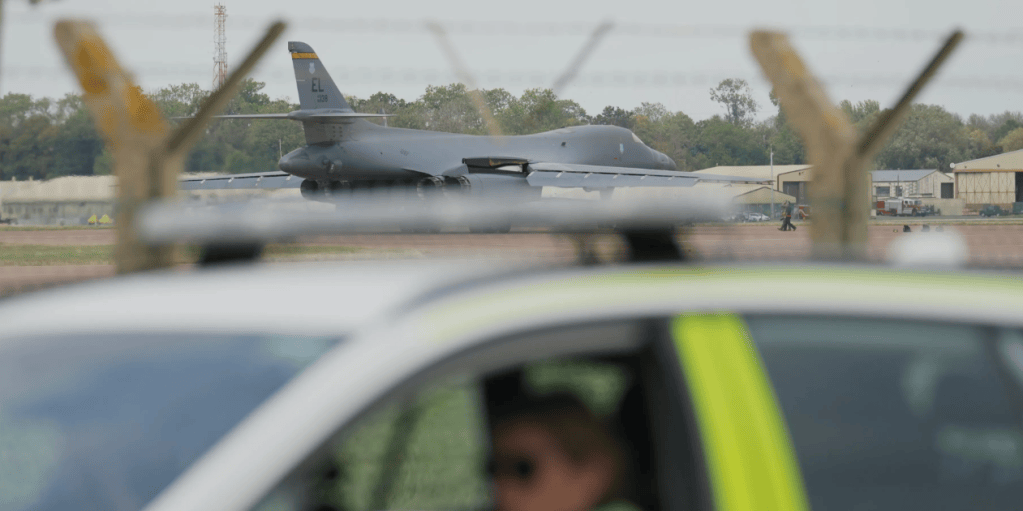
The officers in the car fill the foreground, and the B-1 bomber sits behind them. Bamford (2003) lists foreground, background, and juxtaposition as part of visual syntax, and that pairing puts a quiet English checkpoint next to a war machine. What I find most interesting is that the same AP photo ran with very different headlines. The Intercept used it for a story about the U.S. military struggling to protect its bases amid a “failing” war. The Times of Israel’s live blog ran it alongside updates on Washington’s strike options. Although the image is the same, the framing differs, leading to two quite distinct responses. The photo excludes the target, the crew, and what happens afterward.
Conclusion
I arranged the photos from far to close and then to disruption: waterway, street, child, detail, event. The sequence tells a story of war mostly in a waiting stage and its aftermath, broken up by violence. Coombs (2016) notes that editors decide which pictures are published, their size, and where they appear, and viewers often notice framing less when it is visual than when it is written. Therefore, the sequence of the photographs is, in fact, an argument, and most people do not see it that way.
Ethical problems are very real. Beyond these five photos I chose, the war has been flooded with fakes. An AI-made satellite image of a destroyed U.S. base was posted by an Iranian outlet, and it got millions of views, and AFP found Google’s invisible SynthID watermark. Even real photos are at risk, as experts warn that AI “enhancement” of blurry war images can add details that were never there (Thairath,2026). The Content Authenticity Initiative is trying to solve this problem with Content Credentials, a standard meant to show where media came from and how it was changed. I believe viewers can do this if they learn to ask who made a picture, who chose it, and what was cropped out. I think the future of visual reporting will depend less on any single photo and more on provenance tools like Content Credentials, plus viewers who check each time.
References
- Bamford, A. (2003). The Visual Literacy White Paper. Adobe Systems.
- Coombs, H. (2016). Visual Framing.
- Content Authenticity Initiative. contentauthenticity.org; verification tool.
- Chase, N. Artificial Intelligence in Film.
- eWeek (2026). AI War Propaganda? Viral Images of Captured US Soldiers in Iran Exposed as Fake.
- AFP via Oman Observer (2026). Fake AI satellite imagery spurs war disinformation.
- Thairath (2026). Experts Warn AI-Altered Images of Middle East War Could Distort Facts.
- The Intercept (2026). The U.S. Military Struggles to Protect Its Bases Amid Failing Iran War. Photo: Alastair Grant/AP.
- The Times of Israel (2026). Live blog, October 7, 2026.
- AP (2026). Photos from Tehran, where daily life continues despite war. Photo: Francisco Seco/AP.
- Wikipedia. 2026 Iran war.


Leave a Reply